
The shape and size of the brain varies greatly in different species, and identifying common features is often difficult. Nevertheless, there are a number of principles of brain architecture that apply across a wide range of species. Some aspects of brain structure are common to almost the entire range of animal species; others distinguish "advanced" brains from more primitive ones, or distinguish vertebrates from invertebrates. Now let see who are all don't have brain in this world :)
1. Starfish

Starfishes are also called sea stars because of their star-shape, which are correctly referred to as brittle stars or “basket stars. Although starfish has neither a brain nor a ganglia, they have some sense of touch, sight and smell. Each of the sea star’s arms is wired to high sensitivity. It can sense its immediate environment and the world around it. When one of the arms detects food, it cuts off power to the other arms and starts pulling its body towards the direction of its meal.
2. Sea Sponge

Sponges are multi-cellular animals of the phylum Porifera. There body is full of pores and channels that allows water to circulate through them. Sponges do not have brains and they don’t even have digestive, nervous or circulatory systems. In place of all that they have a bunch of unassigned cells that go around their body turning into whatever kind of cell is needed at the time. Funny enough, this brainless animal can sneeze and its sneeze lasts up to 60 minutes. When a sponge is irritated it inhales water and then contract its body and “sneezes” out the irritant.
3. Sea Anemone

Sea anemones are a group of water-dwelling, predatory animals of the order Actiniaria. They lack a central nervous system and has a neural net of sorts which keeps it actively looking for food. The anemone nabs passers-by with its venomous tentacles, paralyzes and then consumes its prey. After eating, the anemone spews the waste back out through the same opening, as its digestive chamber only has one door, functioning as both mouth and anus.
4. Portuguese Man-O-War
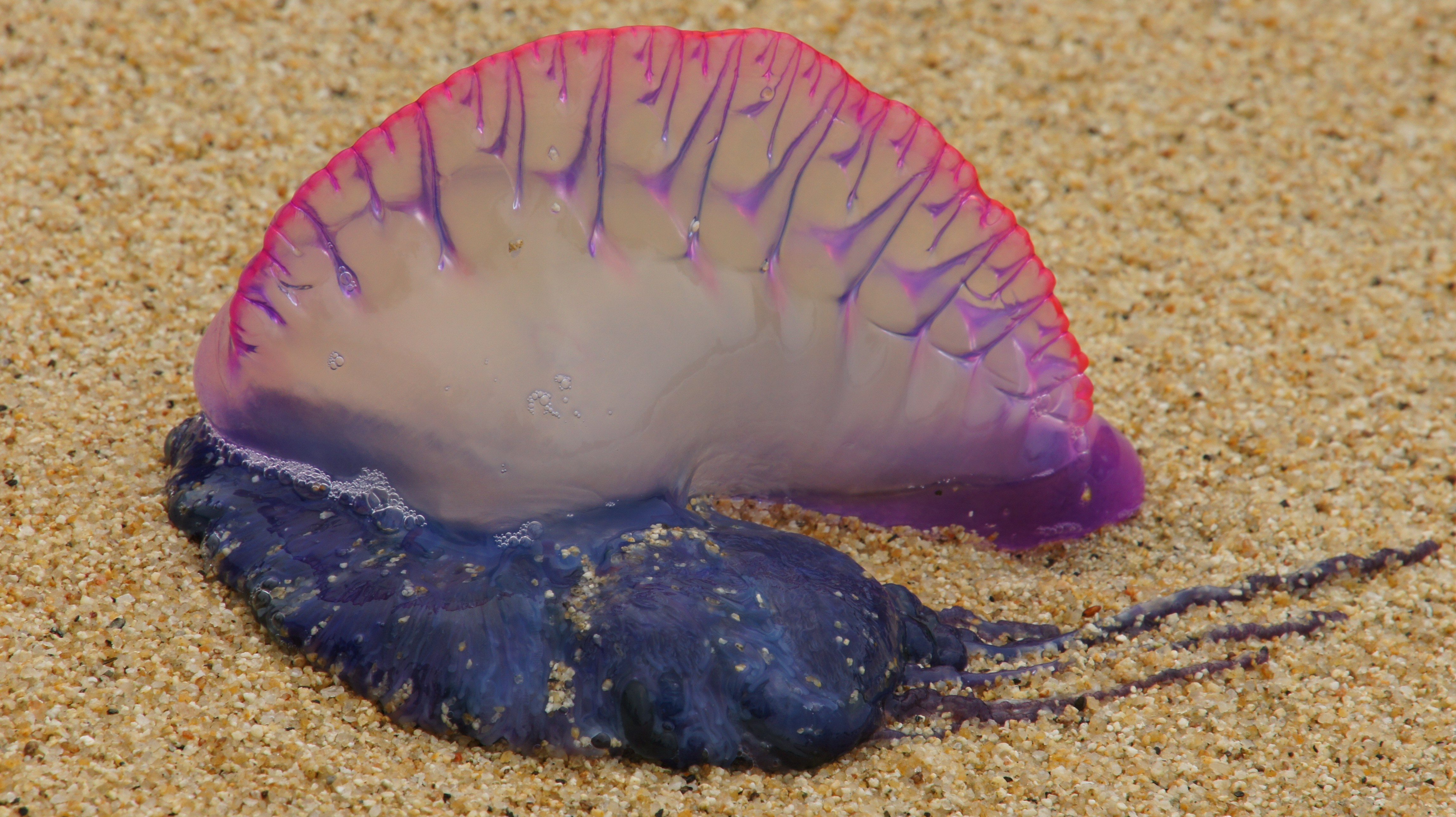
The Atlantic Portuguese man o’ war is also known as the Man-of-war, or floating terror, or blur bottle. It is characterized by a translucent sac that floats on the surface, and a colony of polyps that stick together to create the Portuguese Man-o-War. This creature is known for great survival instincts and its venomous tentacles can deliver a painful sting.
5. Sea Lily

These creatures look more like underwater ferns, but they are actually animals and have no brains. Sea lilies are rooted to the ocean floor and gather food through their feathery arms, which apparently requires no thinking at all. They look delicate, but sea lilies are tough enough to endure the pressure of living up to 20,000 feet below the surface.
6. Jellyfish

Jellyfish are the major non-polyp form of individuals of the phylum Cnidaria. They are free-swimming marine animals consisting of a gelatinous umbrella-shaped bell and trailing tentacles. Jellyfish don’t have so much internal organs. Instead of a brain, it has a neural net, which is a system of nerve cells interwoven all over the animal’s body.
7. Sea Urchin
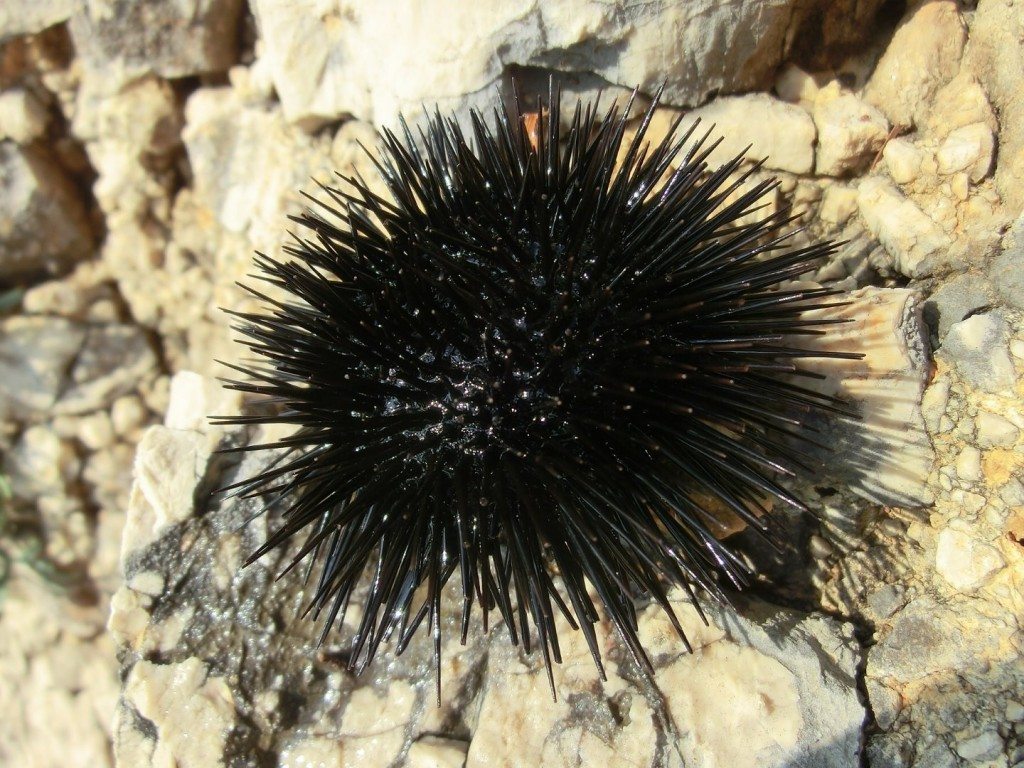
Sea urchins are also called sea hedgehogs. They are small, spiny, globular animals that make up the class Echinoidea of the echinoderm phylum. There is no planning ahead for a creature lacking in brains like Urchins, they creep around the ocean floor looking for food, but have to make up for the lack of brain using their sense organs. They do not need to worry about self-defense either, thanks to the sharp spines covering their bodies which gives them ultimate protection from predators.
8. Sea Cucumber

Sea cucumbers don’t have brains, but they have ingenious defense mechanisms. When under attack, sea cucumbers can startle their attacker by suddenly disgorging their guts and internal organs. Or they can opt to eject long sticky tubes from their anus to ensnare and possibly disable the predator permanently.
9. Sea Coral
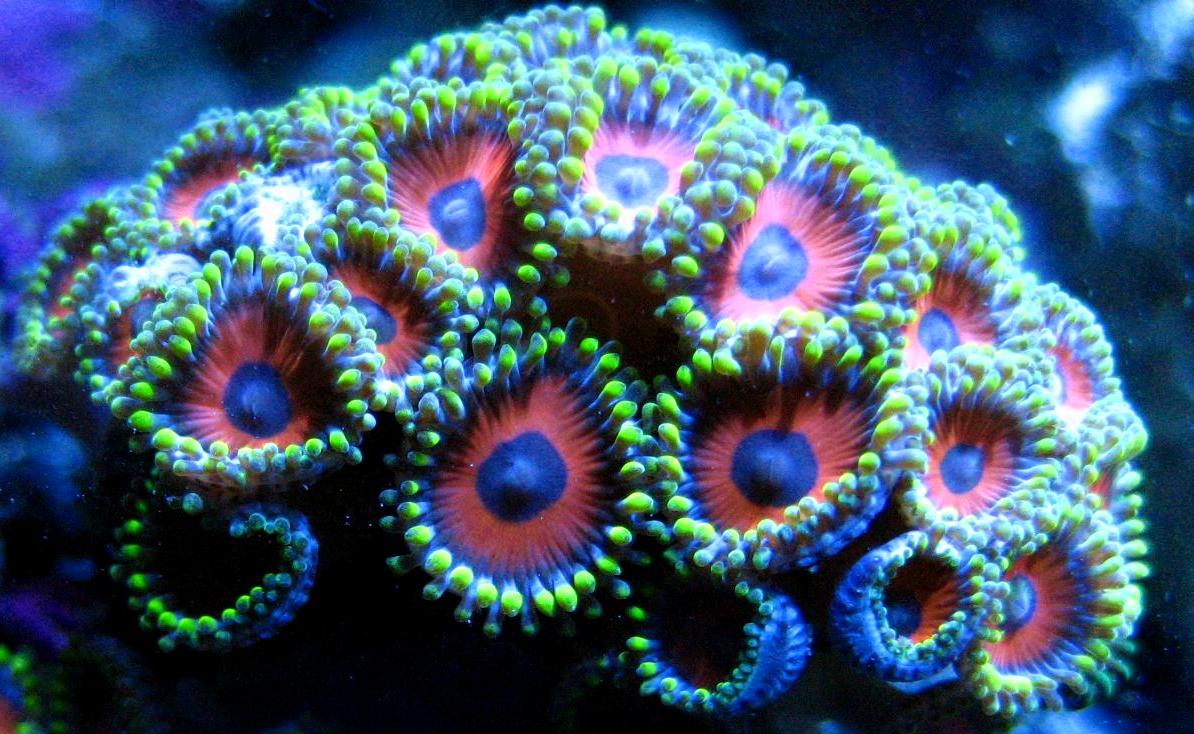
Coral is known for creating multi-colored and textured reefs as each tiny individual coral dies and leaves its colorful shell behind, attached to its neighbor. But corals are actually fierce little warriors. When a predator looms, or when two beds of coral grow into one another territory, the little polyps send out their tentacles to poison and sting the interlopers into submission.
10. Sea Squirts

These are marine tunicates which has a bag-like body with orifices through which water flows in and out of a central pharynx. Sea squirts are filter feeders that look like inflatable straws and skeleton skulls. A newborn sea squirt gets to have a brain, but loses its intellect when it grows up. A baby squirt looks like a tadpole and has a teeny brain and one eye, but no way to eat. It swims to the ocean floor where it attaches itself and then grows into an adult, absorbing its now-useless eye, tail and brain in the process.
Note: Sea squirts do have brains as newborns, but the brains turn out to be useless when they become adults.
^_^
Author: Suresh Dooly
- Get link
- X
- Other Apps
- Get link
- X
- Other Apps
Comments
Post a Comment